
How strategic storytelling took a fundraiser from $900 to $160,000 in under a week.
Overview
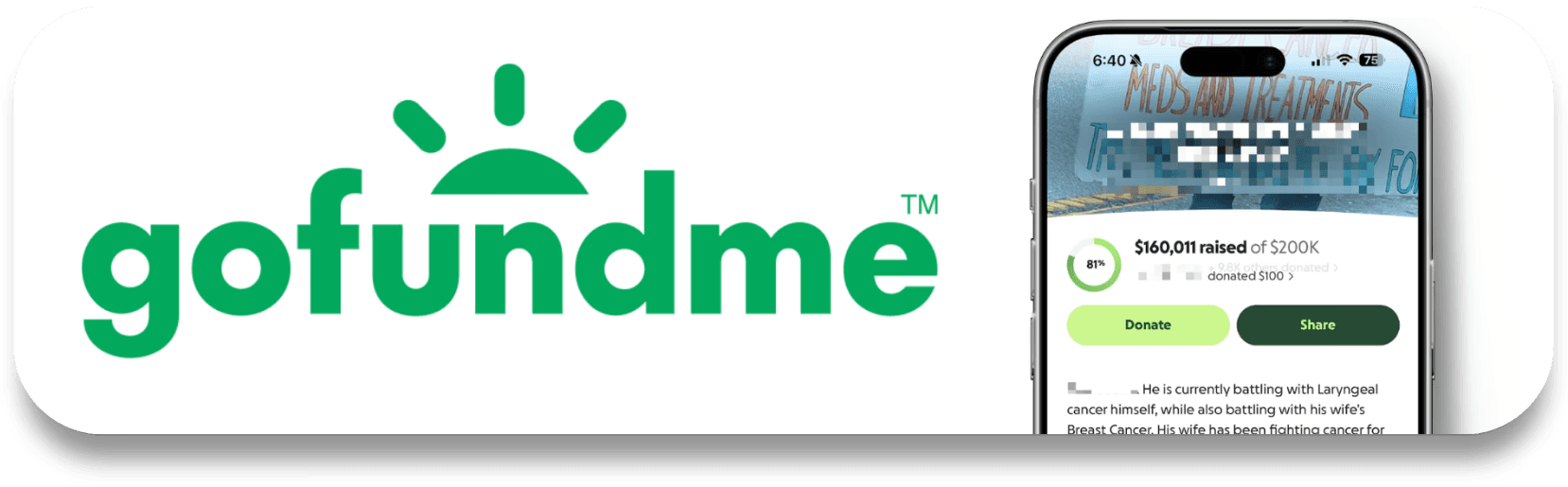
I came across a GoFundMe that had everything it needed to move people and was going nowhere. A man was fundraising for his wife's breast cancer treatment while quietly undergoing cancer treatment himself. The campaign had raised $900. The story was devastating. The presentation wasn't working.
I applied a content strategy built around emotional pacing, narrative structure, and platform psychology to amplify it. Within days, the fundraiser had raised over $160,000 from more than 9,800 individual donors, reached millions of people organically, and gained national visibility without a single dollar in paid promotion.
The Problem I Diagnosed
The fundraiser wasn't failing because the story was weak. It was failing because the story wasn't being told in a way that moved people to act.
The original campaign presented information. It didn't build an emotional arc. There was no hook, no pacing, no reveal, and no clear call to action that made sharing feel meaningful rather than transactional. People who saw it likely felt sad and kept scrolling.
That gap between a powerful story and ineffective delivery is exactly the kind of problem I solve.
My Strategic Approach
I designed a two-video content system to take viewers from awareness to action in under 60 seconds each.
Every decision was intentional.
1. Visual immediacy: The opening frame stopped the scroll before a single word was read. That pattern interrupt had to happen in under two seconds.
2. Layered storytelling: Video 1 introduced his wife's illness. Video 2 revealed he was also battling cancer himself. Releasing information progressively builds emotional investment and keeps viewers watching through the end.
3. First-person framing: Telling the story from my own point of view made it feel like a personal recommendation, not a campaign. That framing lowers the psychological resistance people have to sharing something that might feel performative.
4. Captions designed for action: Each caption was engineered to create curiosity or emotional tension, not to summarize. The goal was to make viewers feel compelled to watch the next second, then share.
5. Share over donate: Rather than asking for money directly, I asked people to share. That reframe turned passive viewers into active participants and expanded organic reach before the donation ask ever landed.
6. Intentionally raw production: No filters, no transitions, no music. The authenticity was a strategic choice. Polished content would have undermined the message.
Results
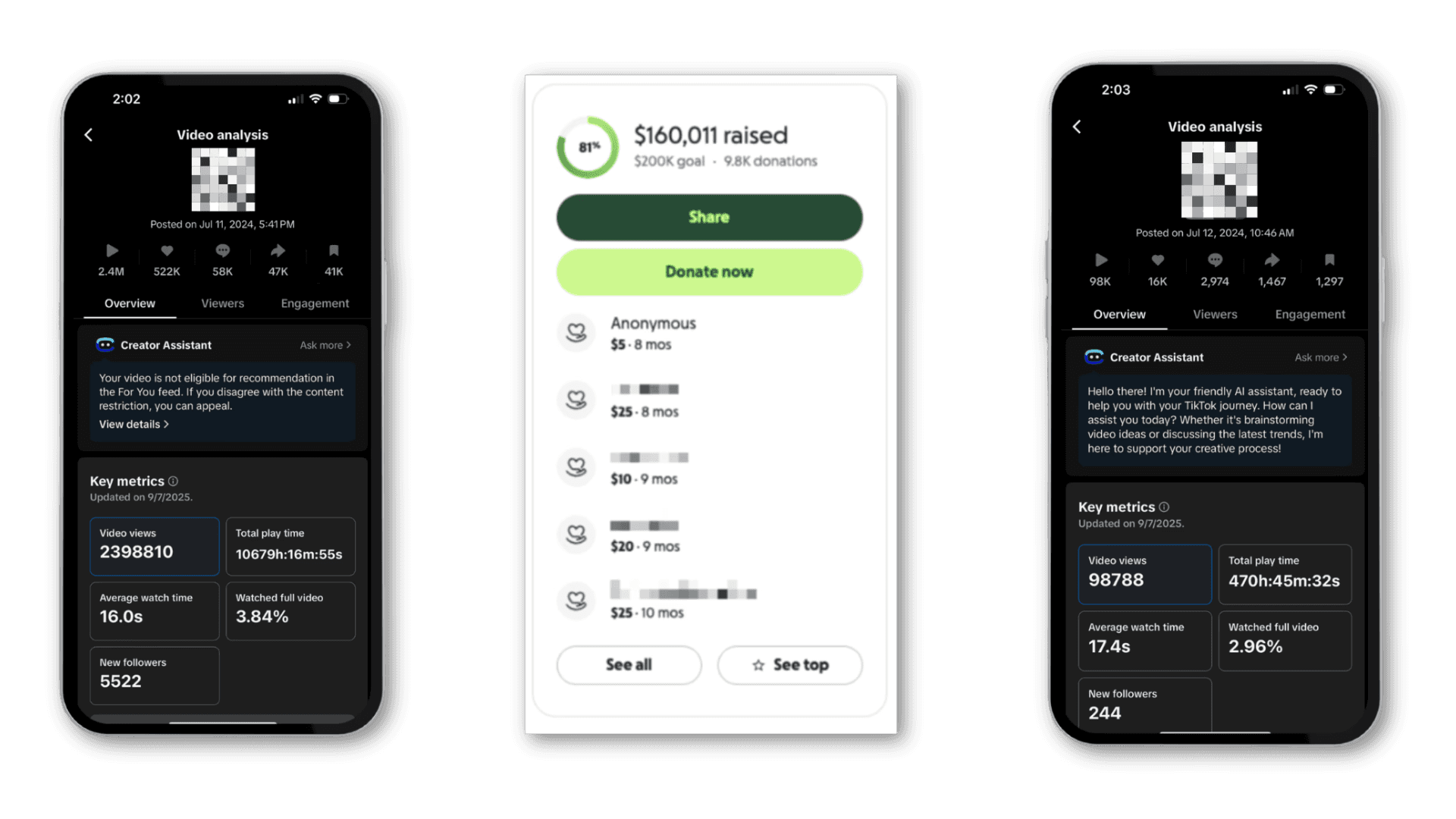
Video 1
2.4M views
522K likes
58K comments
47K shares
41K saves
Video 2
98.8K views
16K likes
2,974 comments
1,467 shares
1,297 saves
Campaign outcome
$160,011 raised from $900 in under one week
9,800+ individual donors
National visibility, including local news coverage
What This Demonstrates
This project had no budget, no brand, no team, and no paid distribution. What it had was a clear strategic framework applied to a real human story.
It proved that emotional pacing, narrative structure, and platform-specific decision-making can drive real-world outcomes at scale. The same principles I applied here, diagnosing why a message isn't landing, restructuring the story, and designing for specific audience behavior, are what I bring to every content strategy engagement.
